

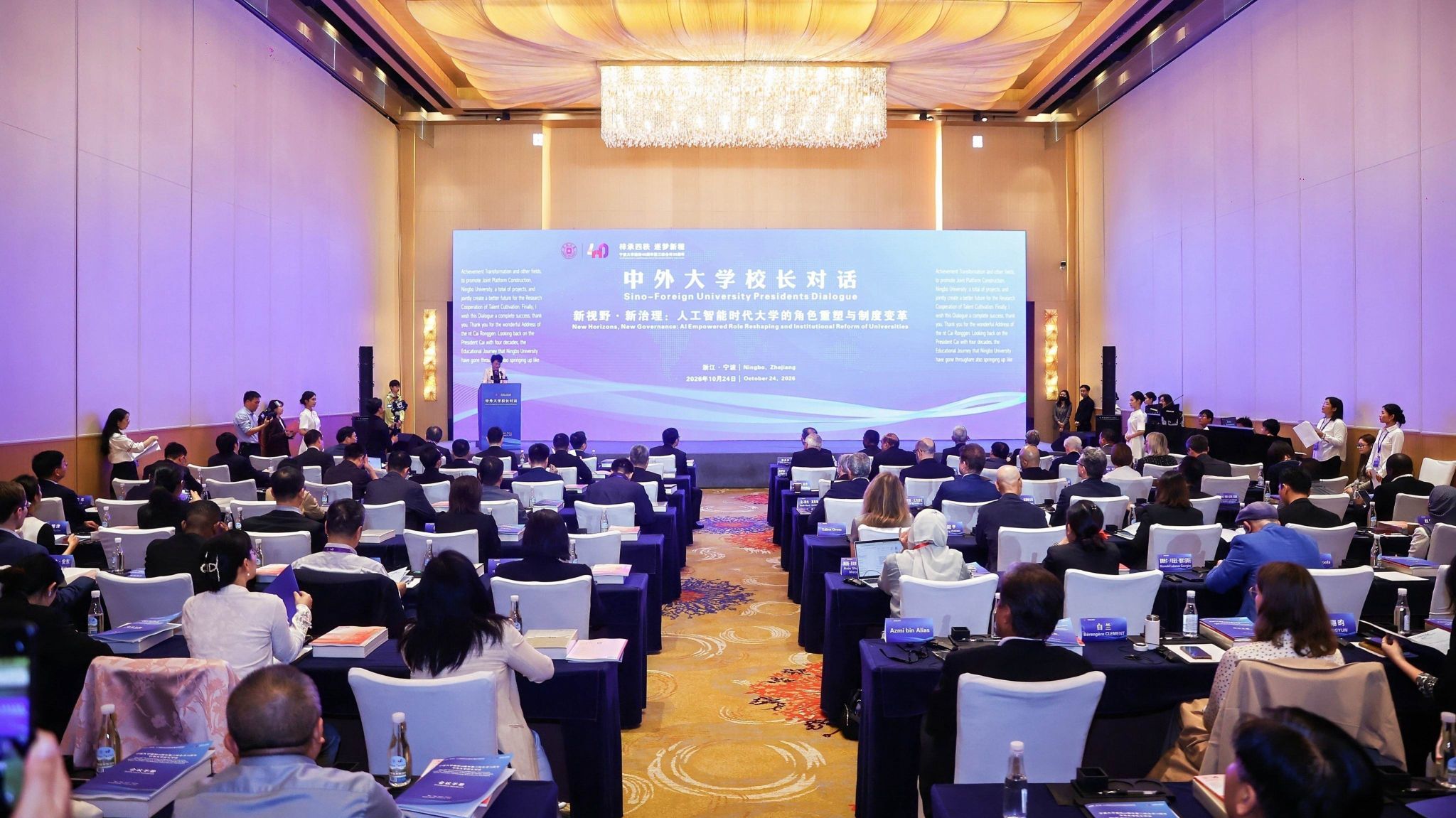
10月24日,宁波大学建校40周年暨三校合并30周年主体活动之一“中外大学校长对话”举行。此次对话会以“新视野·新治理:人工智能时代大学的角色重塑与制度变革”为主题,来自23个国家和地区34所高校及机构的60余名国(境)外嘉宾、30余名国内兄弟高校嘉宾参会。浙江省教育厅党组成员、副厅长陈仁坚,宁波大学校长、中国科学院院士蔡荣根出席并致辞;宁波市教育局党委副书记陈金辉出席。宁波大学副校长王青青主持对话会。
On October 24, one of the major events celebrating the 40th anniversary of Ningbo University and the 30th anniversary of the merger of its three predecessor institutions, the “Dialogue among University Presidents from China and Abroad,” was held under the theme “New Perspectives, New Governance: Redefining the Role of Universities and Transforming Institutional Systems in the Age of Artificial Intelligence.” More than 60 international guests from over 34 universities and institutions across 23 countries and regions, along with over 30 representatives from universities across China, attended the event. Chen Renjian, Member of the Party Leadership Group and Deputy Director-General of the Zhejiang Provincial Department of Education, and Cai Ronggen, President of Ningbo University and Member of the Chinese Academy of Sciences, attended and delivered opening remarks. Chen Jinhui, Deputy Secretary of the Party Committee of the Ningbo Municipal Education Bureau, was also present. Wang Qingqing, Vice President of Ningbo University, chaired the dialogue.
陈仁坚代表省教育厅对活动的举办表示热烈祝贺。他指出,当前人工智能正深刻重塑大学的功能定位与治理逻辑,本次对话会主题切中时代之问、回应全球之需,开放合作正在成为大学发展的战略刚需,单打独斗难以破题,开放合作方能共赢。他表示,浙江愿做人工智能时代大学制度变革的“试验场”,期待与各国高校携手同行,共同探索高等教育高质量发展的新路径。
On behalf of the Zhejiang Provincial Department of Education, Chen Renjian extended warm congratulations on the event. He noted that artificial intelligence is profoundly reshaping the roles and governance models of universities. The theme of the dialogue addressed pressing challenges of our time and responded to global needs. He emphasized that openness and cooperation have become strategic necessities for university development, as working in isolation is unlikely to address these challenges, while collaboration creates opportunities for mutual success. He expressed Zhejiang's willingness to serve as a “testing ground” for institutional transformation in higher education in the age of AI and looked forward to working with universities around the world to explore new pathways for high-quality development in higher education.
蔡荣根向省教育厅、海内外嘉宾致以诚挚感谢。他用“四个十年”回顾了学校发展历程。他表示,人工智能正以引领性、战略性、颠覆性力量推动社会变革,高等教育由此迎来前所未有的机遇与挑战。他期待与会嘉宾在跨文化对话中凝聚共识,在人才培养、科研合作、成果转化等领域深化合作,推动共建平台、共享资源、共育项目,共同开创高等教育国际合作的美好未来。
Cai Ronggen expressed his sincere gratitude to the Zhejiang Provincial Department of Education and guests from China and abroad. Reflecting on the university's development through its “four decades,” he noted that artificial intelligence, as a leading, strategic, and disruptive force, is driving profound social transformation and bringing unprecedented opportunities and challenges to higher education. He hoped that participants would build consensus through cross-cultural dialogue and deepen cooperation in talent development, research collaboration, and the application of research成果. He also called for joint platforms, shared resources, and collaborative projects to help shape a promising future for international cooperation in higher education.
宁波大学与巴基斯坦拉合尔大学、美国中田纳西州立大学、匈牙利欧布达大学、加拿大麦吉尔大学、意大利维罗纳大学等国外高校,以及香港教育大学、香港理工大学签署合作协议。本次共7项合作协议落地,涵盖医学研究、专业共建、学生交换、科研合作、体育交流、教师访学等多个领域。王青青表示,签约既是本次对话会的重要成果,也是从共识走向行动的具体体现,期待各方以签约为新纽带,推动合作走深走实、行稳致远。
Ningbo University signed cooperation agreements with several international universities, including the University of Lahore in Pakistan, Middle Tennessee State University in the United States, Óbuda University in Hungary, McGill University in Canada, and the University of Verona in Italy, as well as the Education University of Hong Kong and The Hong Kong Polytechnic University. A total of seven agreements were signed, covering areas such as medical research, joint academic programs, student exchange, research collaboration, sports exchange, and faculty visits. Wang Qingqing noted that the agreements represented an important outcome of the dialogue and a concrete step toward turning shared understanding into action. She expressed the hope that the agreements would serve as new bridges for deeper, more sustainable cooperation.
活动主旨发言环节,美国中田纳西州立大学校长西德尼·A·麦克菲、香港教育大学校长李子建、宁波诺丁汉大学党委书记沈伟其、宁波大学校长蔡荣根分别作主旨报告。四位嘉宾从不同视角分享了人工智能时代大学角色重塑、治理体系变革、人才培养模式创新和国际化办学的思考与实践。西德尼·A·麦克菲围绕人工智能时代大学角色的重塑,提出大学应从传授知识转向培养判断力与创造力,主动引领变革而非被动应对;李子建聚焦教师教育与人工智能融合,探讨了教育大学在智能时代的使命转型;沈伟其结合中外合作办学实践,分析了人工智能对国际化人才培养的机遇与挑战;蔡荣根则从人工智能时代大学的变与不变出发,提出深化产教融合,在技术变革中坚守育人本质、以制度创新回应时代课题。
The keynote session featured presentations by Sidney A. McPhee, President of Middle Tennessee State University; Lee Chi Kin, President of the Education University of Hong Kong; Shen Weiqi, Secretary of the Party Committee of the University of Nottingham Ningbo China; and Cai Ronggen, President of Ningbo University. From different perspectives, the four speakers shared their insights and practical experiences regarding the changing role of universities, transformations in governance, innovation in talent development, and international education in the age of AI. Focusing on redefining the role of universities, Sidney A. McPhee proposed that universities should shift from simply imparting knowledge to cultivating judgment and creativity, taking an active role in leading change rather than passively responding to it. Lee Chi Kin explored how teacher education institutions can redefine their mission through the integration of AI and education. Drawing on experience in Sino-foreign cooperative education, Shen Weiqi analyzed the opportunities and challenges AI presents for developing internationally oriented talent. Cai Ronggen discussed what should change and what should remain unchanged in universities in the age of AI, advocating deeper integration between industry and education while upholding the fundamental mission of education and addressing contemporary challenges through institutional innovation.
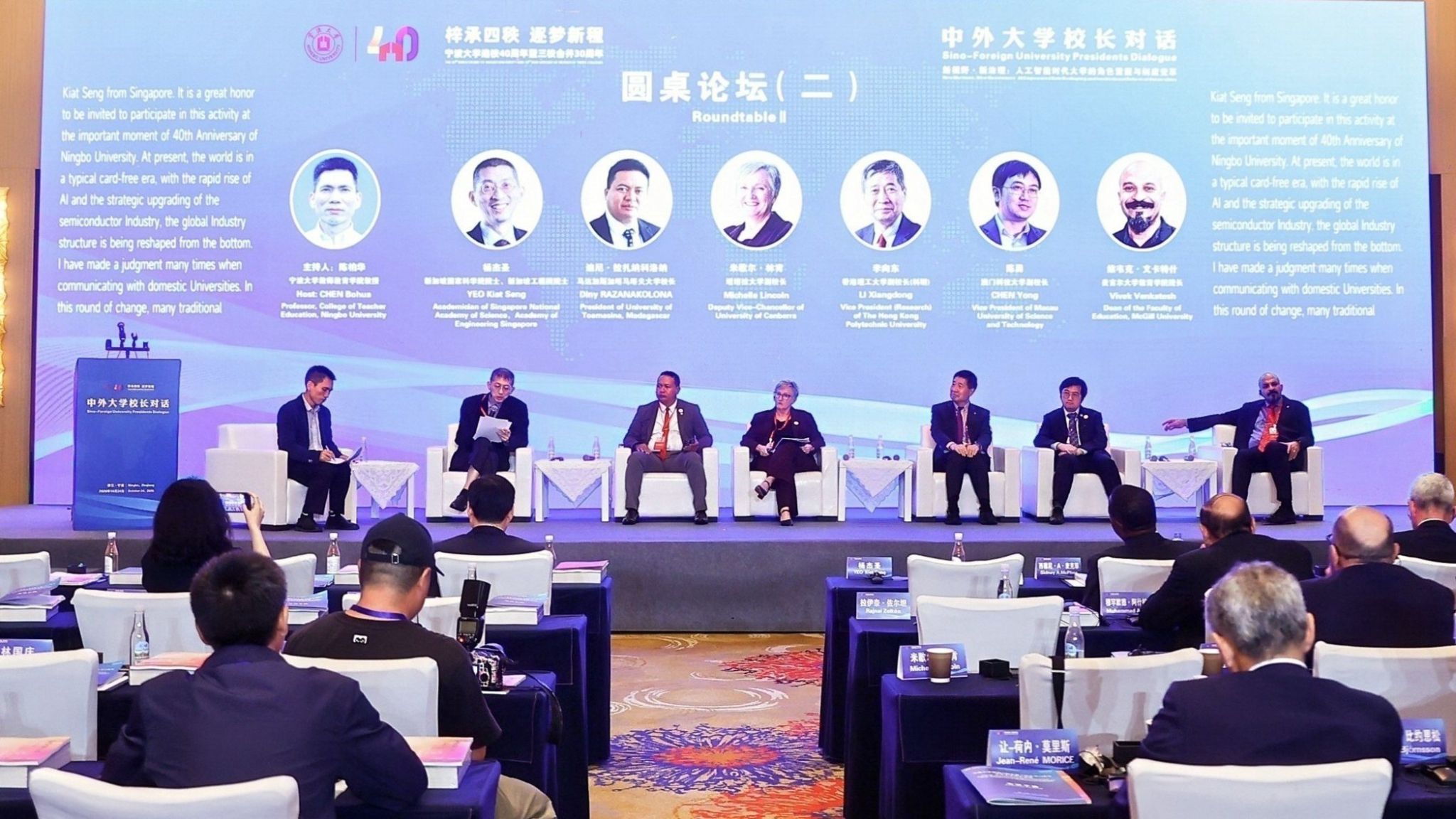
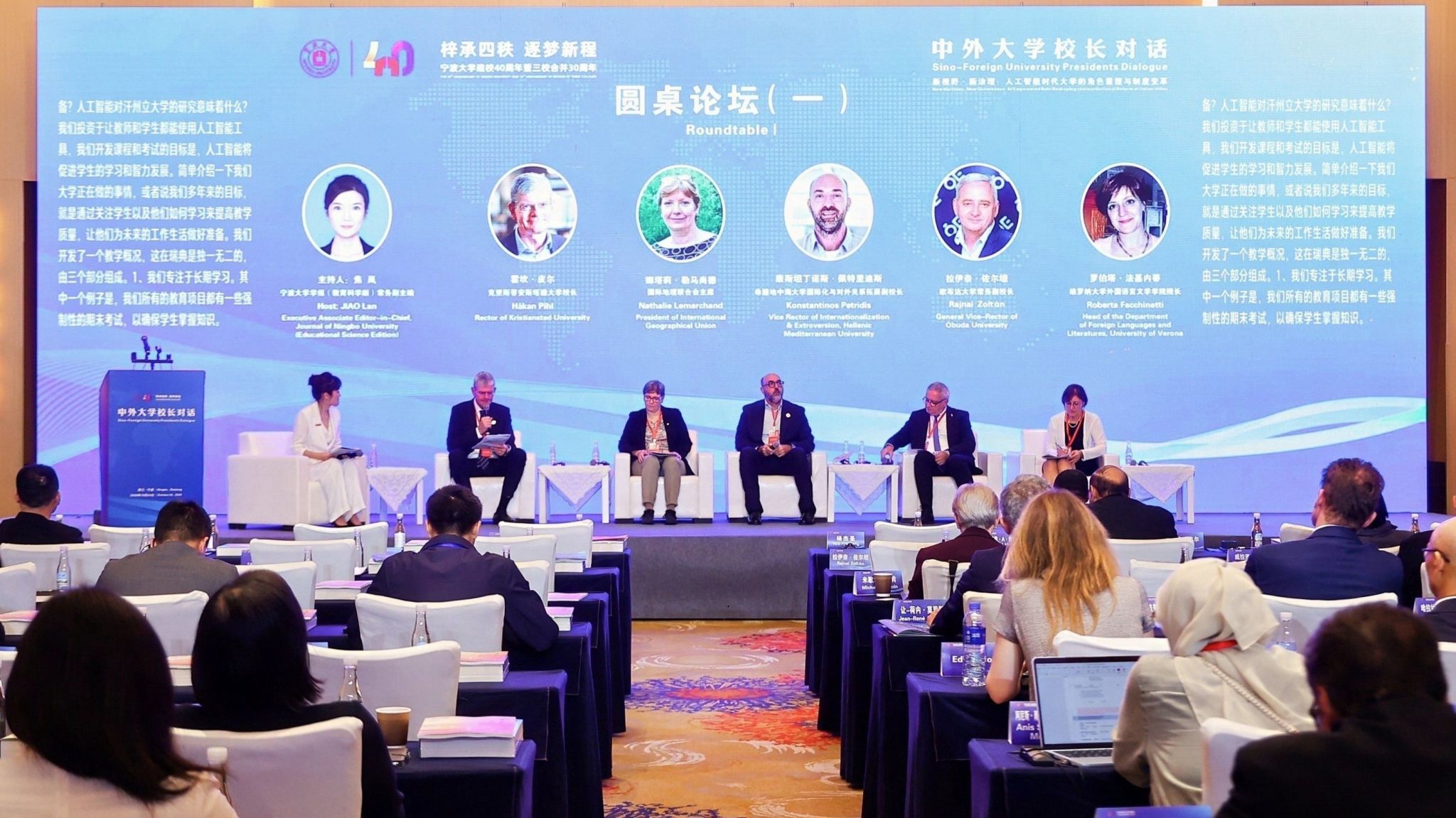
圆桌论坛分两组进行,分别由宁波大学焦岚教授和陈柏华教授主持,来自法国、瑞典、希腊、匈牙利、意大利、新加坡、马达加斯加、澳大利亚、加拿大等国家,以及中国香港、中国澳门地区高校的代表,围绕人工智能时代大学的角色重塑、治理制度变革、人才培养模式创新、科研评价机制调整等开展了深入研讨。与会嘉宾认为,人工智能既是提升教学科研效率的工具,更应成为促使大学重新审视自身使命的重要力量;人工智能时代,高等教育更要以人为中心,扩大合作交流。
The roundtable discussions were held in two groups, chaired by Professor Jiao Lan and Professor Chen Baihua of Ningbo University. Representatives from universities in France, Sweden, Greece, Hungary, Italy, Singapore, Madagascar, Australia, and Canada, as well as Hong Kong and Macao, China, engaged in in-depth discussions on redefining the role of universities, transforming governance systems, innovating talent development models, and reforming research evaluation mechanisms in the age of AI. Participants agreed that artificial intelligence is not merely a tool for improving the efficiency of teaching and research; it should also serve as a catalyst for universities to rethink their missions. They emphasized that higher education must remain people-centered while strengthening international cooperation and exchange in the AI era.
王青青在总结讲话中表示,宁波大学将继续秉持开放包容、合作共赢的理念,与中外伙伴一道,推动教育交流互鉴,培养具有全球视野的优秀人才。她期待以本次对话会为新的纽带,把共识转化为行动,把愿景落实为项目,把伙伴关系升华为长久友谊,为构建更加开放、包容的全球高等教育共同体贡献智慧与力量。
In her concluding remarks, Wang Qingqing reaffirmed that Ningbo University will continue to uphold the principles of openness, inclusiveness, and mutually beneficial cooperation, working with partners in China and abroad to promote educational exchange and mutual learning and cultivate outstanding talent with a global perspective. She expressed her hope that the dialogue would serve as a new bridge for turning consensus into action, visions into concrete projects, and partnerships into lasting friendships, contributing insights and strength to the development of a more open and inclusive global higher education community.