


编者按|Editor’s Note
从发现雨林石栎新种,到深入苏门答腊雨林追踪极危犀牛与大象,中国科学院大学2026级博士毕业生苏里亚的求学之路勾勒出植物分类、大型兽类生态与跨国物种保护的完整图景。依托中国科学院西双版纳热带植物园开放多元的国际科研平台,他取得了既具学术价值、又有实践意义的研究成果。本文记录的不仅是这篇优秀博士论文的调研历程,更是青年科研人员以跨学科视野与国际协作守护热带珍稀生灵的生动缩影。博士毕业后,苏里亚继续在中国科学院西双版纳植物园做博士后的研究。
From discovering a new rainforest stone oak to tracking endangered rhinos and elephants in Sumatran rainforests, the academic journey of Surya, a 2026 UCAS doctoral graduate, links plant taxonomy, large mammal ecology, and transboundary conservation. At Xishuangbanna Tropical Botanical Garden, CAS, his work is both academically solid and conservation‑relevant. This is more than fieldwork for a thesis—it vividly portrays a young scientist protecting tropical wildlife through interdisciplinary research and international collaboration. After graduation, Surya pursues postdoctoral research at Xishuangbanna Tropical Botanical Garden, CAS.
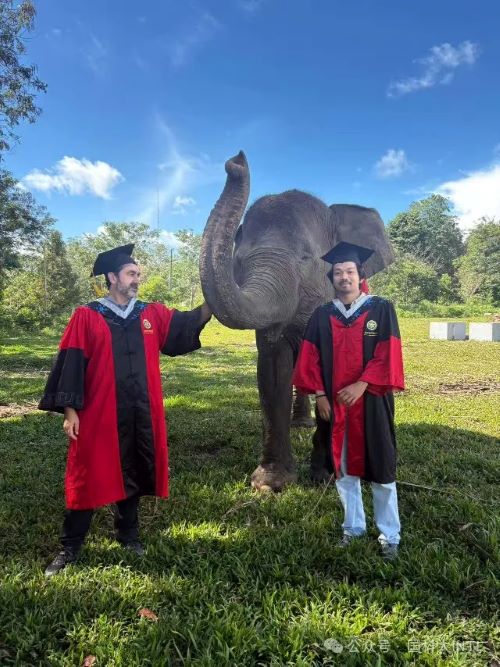
"Never in a million years would I have predicted that a person like me would have the privilege to closely observe not one but two of the most charismatic animals, the Sumatran elephant and the Sumatran rhino. These two animals are almost impossible to study. Imagine if I didn't try, I guess we'll never know."
“我从未想过自己能有机会近距离研究两种极具代表性的珍稀动物——苏门答腊象与苏门答腊犀牛。这两个物种的野外研究难度极大,倘若当初我没有踏上研究之路,至今都难以摸清它们的生存奥秘。”
Building a Foundation in Botany植物学入门
My doctoral journey began in 2021 at University of Chinese Academy of Sciences. My early focus on the plants of the tropical rainforests of Sumatra yielded something rare in science — the description of a new species. Working on the taxonomy of stone oaks, I documented a previously undescribed species that grows in Sumatran forests and serves as a critical food source for the Critically Endangered Tapanuli orangutan, one of the world's rarest great apes. This tree species was so rare that I only found two adult trees after an extensive survey of the area. This discovery was published in PhytoKeys as Lithocarpus tapanuliensis, and was subsequently featured in Mongabay and several conservation news portals — bringing attention to a corner of biodiversity that too often goes unnoticed. Alongside this, I was awarded a grant from the Mohamed bin Zayed Species Conservation Fund to investigate the ecology of giant tortoises in Sumatra, Indonesia. This work grew into a peer-reviewed publication in Integrative Zoology, ranked among the top 5% of journals in zoology. Together, these two projects gave me a strong foundation in plant taxonomy and species-level ecological research, and demonstrated my capacity to conduct and publish independent work across taxa — botanical and faunal alike.
2021年,我被录取为中国科学院大学博士研究生,开始了我的博士学习之旅。最初,我的研究重点是印尼苏门答腊雨林的植物,并取得了一项重要的科研成果 —— 发现并正式命名一个植物新种。我开展石栎属植物分类研究时,在苏门答腊雨林中找到一种此前未被学界记录的树种,它是极危物种打巴奴里红毛猩猩的重要食物来源之一。该树种分布极其稀少,我完成大范围调查后,仅找到两株成年植株。这一新物种以塔帕努利石栎 (Lithocarpus tapanuliensis) 为名发表于《PhytoKeys》期刊,后续还被全球环保媒体 Mongabay 及多家保护类新闻平台报道,让这片鲜为人知的生物多样性区域获得关注。与此同时,我获得穆罕默德・本・扎耶德物种保护基金资助,开展印尼苏门答腊巨型陆龟生态研究,相关论文发表在全球动物学排名前5%的期刊《Integrative Zoology》上。上述两项研究为我打下扎实的植物分类与物种生态学研究基础,这些工作充分证明了我跨越不同生物类群、独立开展科学研究的能力。
An Uncommon Shift Toward Megaherbivores 转向大型兽类:开启新研究
As this early work matured, I made decision to redirect my doctoral research toward large mammal ecology (the Sumatran rhino and Sumatran elephant). This was not a leaving from my botanical training but an extension of it. I think large-mammal ecology is a field with a rare gap: relatively few ecologists who study megafauna also have a strong grounding in plant taxonomy and vegetation science, even though the diet, habitat structure, and movement patterns of species like rhinos and elephants are inseparable from the botanical composition of the forests. I saw an opportunity to fill that gap, bringing a botanist's eye to questions of megafauna habitat and conservation, and in doing so to advance the ecological study of large mammals in a way that drew directly on the strengths I had already built.
完成前期动植物基础研究后,我决定将博士的研究转向大型兽类生态,聚焦苏门答腊犀牛与苏门答腊象。这并非舍弃植物学积累,而是对植物学科研能力的延伸拓展。研究大型兽类的生态学家中,很少人同时具备扎实的植物分类学和植被学基础,但犀牛、大象的食性、栖息环境结构、迁徙活动规律,都与森林植物群落密不可分,这是该领域明显的研究空白。我抓住这一契机,以植物学视角切入大型兽类栖息地与物种保护研究,依托自身已有的学科优势,推动大型兽类生态学研究。
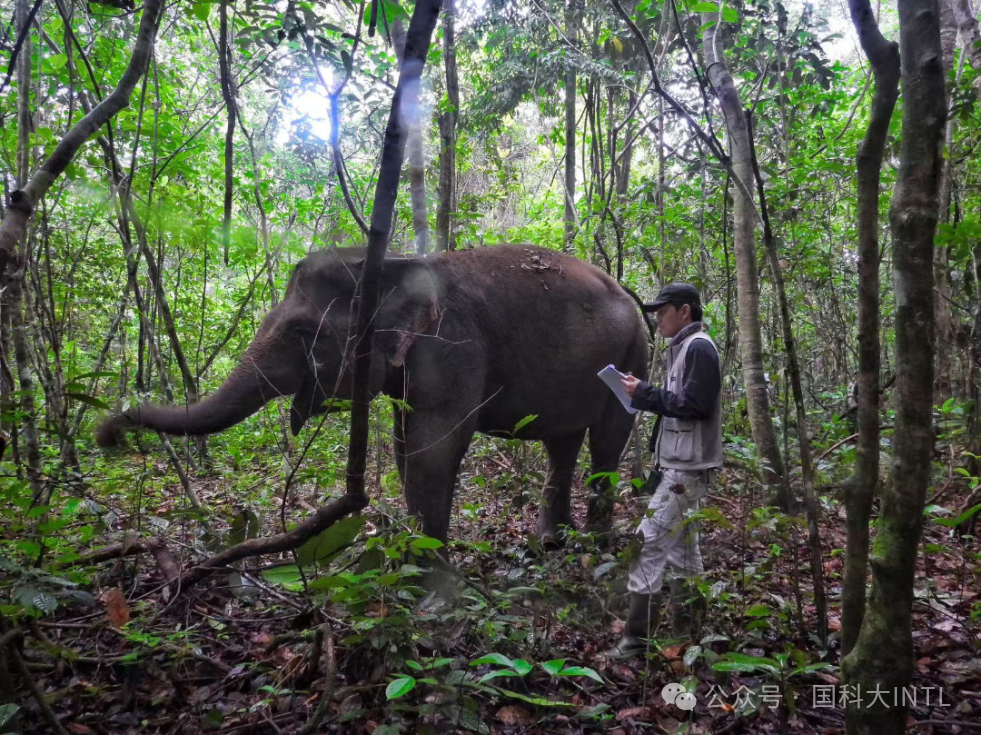
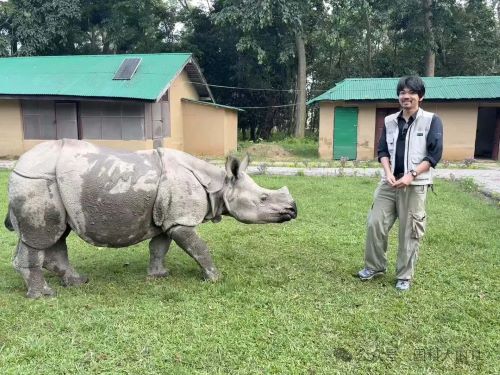
I carried this reasoning into my dissertation proposal, and shortly after arriving at Xishuangbanna Tropical Botanical Garden, CAS (XTBG). With that milestone behind me, I set course for the work I had been preparing for then returning to Indonesia to conduct fieldwork among some of the rarest mammals on Earth. My fieldwork focused on understanding how these species use their habitats, what they eat, their impacts to vegetation structure and what drives their movement, and how the landscapes they depend on can be better managed to support their survival. For the Sumatran rhino, this meant developing a meaningful dietary framework for habitat assessment and management that successfully published in Biological Conservation. This study represents a meaningful step forward for future conservation planning for Sumatran rhinos in Indonesia, offering evidence-based guidance at a moment when every surviving individual of this species counts. The rhino population is estimated at fewer than 30 individuals in the wild by the IUCN, making every conservation decision consequential, and every scientific insight precious.
带着这一研究思路,返回版纳植物园后我完成了博士开题答辩。完成开题后,我重返印尼开展长期野外工作。野外调查核心内容包括:两种大型兽类的栖息地利用模式、取食食性、对森林植被结构的影响、迁徙驱动因素,以及如何优化它们赖以生存的景观管护方案。针对苏门答腊犀牛,我构建一套完整的食性评估与栖息地管理体系,相关成果顺利发表于《Biological Conservation》。据 IUCN 评估,野生苏门答腊犀牛种群不足 30 头,每一头个体都弥足珍贵,我的研究为这个种群后续保护规划提供了支撑,是该物种保护领域一项重要突破。在种群极度濒危的现状下,每一项保护决策、每一条科学结论都意义重大。
From Research to Real-World Impact 从学术理论到保护实践
My work on Sumatran elephant ecology has been directly implemented on the ground. Following my findings on human-elephant conflict, conservation authorities are now implementing a Chinese-model steel fence design — inspired by approaches successfully used in China — adapted to the Indonesian context based on my field recommendations. With my dissertation results actively informing where and how these fences are being deployed around National Park boundaries to reduce dangerous encounters between communities and elephants.
我关于苏门答腊象的人象冲突研究成果已全面落地实施。 印尼当地保护机构根据我对人象冲突的调研结论,借鉴了中国成熟的钢制围栏模式,并对设施进行了针对性优化。工作人员在国家公园边界规划、布设防护围栏,大幅减少当地居民与野生大象的危险冲突。
Perhaps equally exciting is what is happening with the Sumatran rhino framework I developed. Because the ecological logic underpinning it is sound and transferable, conservation managers are now adapting and replicating it for Javan rhinos (Rhinoceros sondaicus) — a rhino so rare it may have fewer individuals remaining in the wild than any other large mammal. Watching a methodological framework cross from one critically endangered species to another, potentially helping to protect both, is the kind of outcome that makes the long hours of fieldwork and data analysis feel worthwhile.
同样振奋人心的是我为苏门答腊犀牛搭建的保护框架的应用前景。这套体系依托生态学逻辑,具备极强的可迁移、可复制特性,如今保护机构已将其改良后用于爪哇犀牛(Rhinoceros sondaicus)的保护。爪哇犀牛是全球现存野生个体数量最少的大型哺乳动物。 亲眼见证一套研究框架从一种极危犀牛迁移应用至另一物种、同步助力两种濒危犀牛保护,漫长艰苦的野外采样与数据分析,都变得格外有价值。
These impacts reflect something important about my time at XTBG: studying here has proven to be not only academically rigorous but applied in the most meaningful sense. The connections and collaborative culture fostered at XTBG created the conditions for science that reaches beyond academic circles and into the field and into government offices.
这些落地成效,也印证了我在版纳植物园学习的成果:在这里求学,不仅能接受严谨系统的学术训练,更能产出具备实际应用价值的研究成果。版纳植物园开放的交流氛围、多元的协作网络,让科研走出学术论文,真正落地野外一线、走进政府保护管理部门。
Contributing to the Scientific Community反哺学术共同体
Beyond my own research, I have tried to give back to the community that has supported my development. I have served as a peer reviewer for several prestigious journals including Integrative Zoology, Integrative Conservation, PhytoKeys, and Gajah. Reviewing scientific manuscripts is an invisible but essential form of service, and I take it seriously as a responsibility to the integrity of the fields I work within. This experience has also sharpened my own critical thinking and writing, reminding me that science advances through community, collaboration, and the willingness to engage honestly with ideas, not just through individual ambition.
在推进个人研究项目之余,我也积极回馈学术界。我目前担任《Integrative Zoology》、 《Integrative Conservation》、 《PhytoKeys》 及《Gajah》多家期刊的同行评审。审稿是一项默默无闻却又不可或缺的学术服务工作,我始终以严谨的态度履职。同时,这些经历也极大地淬炼了我的批判性思维和学术写作能力。我深刻体会到,科学的每一次进步,都离不开研究人员之间坦诚的交流、沟通与合作。
A PhD is, among other things, a prolonged exercise in learning who you are as a thinker and a scientist. The years between 2021 and my graduation in June 2026 have been transformative in ways that go far beyond the publications and the fieldwork log. I arrived at the beginning of this journey as a graduate student with enthusiasm and field experience in Indonesian forests. I’m leaving it as a researcher with a clearer sense of how knowledge is built, how conservation practice can be improved through rigorous evidence, and how international collaboration opens doors that would remain firmly closed otherwise. Working within XTBG's environment — one that brings together ecologists, botanists, and conservation biologists from across Asia and beyond — has permanently shaped how I think about interdisciplinary science and the value of diverse perspectives in addressing complex ecological problems.
攻读博士学位是一场漫长的修行:在钻研中认清身为思考者与科研人的本心。自 2021 年入学至 2026 年 6 月毕业,数载求学之路带给我的蜕变,早已不止论文产出与野外考察履历所能概括。起初,我只是一个满腔热血、仅有基础野外经验的研究生,而现在,我已经成长为一名专业的科研工作者。我清晰地洞悉了知识构建的脉络,掌握了如何运用严密科学证据来优化保护实践的方法,更深刻认识到国际合作在打破重重科研壁垒中的巨大力量。版纳植物园汇聚了来自亚洲乃至全球的生态学家、植物学家和保护生物学家。这种交叉学科的研究环境重塑了我的学术思维,让我意识到多元视角在解决复杂生态问题中的关键作用。
My doctoral dissertation was rated "Excellent". This honor recognizes my years of hard work: I carried out cross-border research under harsh conditions, and pushed the limits of field ecological research. I would like to express my sincere gratitude to my supervisor Prof. Jose Ahimsa Campos Arceiz. Prof. Jose Ahimsa Campos Arceiz, an internationally renowned tropical conservation ecologist, is currently member of the Academic Committee of Xishuangbanna Tropical Botanical Garden of the Chinese Academy of Sciences and PI of the Wildlife Interactions and Conservation Innovation Team. He conducts interdisciplinary research and conservation capacity building on megafauna ecology and conservation, including their ecological functions and how to promote science-based human-wildlife coexistence in China and Tropical Asia.
我的博士毕业论文总体被评为“优秀”。这份荣誉是对我多年辛勤付出的最好认可,在恶劣的条件下开展跨国研究,并不断拓宽野外生态学研究的边界。在此,我要向我的导师Jose Ahimsa Campos Arceiz研究员表达最诚挚的谢意。Jose Ahimsa Campos Arceiz研究员是国际著名的热带保护生态学家,现任中国科学院西双版纳热带植物园学术委员会委员、野生动物互作与保护团队首席科学家,主要从事中国及东南亚地区大型兽类生态与保护、人与野生动物冲突的多学科交叉研究及保护能力建设研究。
I can't thank the Chinese government, University of Chinese Academy of Sciences, Xishuangbanna Tropical Botanical Garden CAS, CAS-SEABRI, and ANSO enough for believing in me and supporting this work with generous funding, and also from Indonesian side National Park, Ministry of Forestry, and Yayasan Badak Indonesia (YABI) for making this entire success story possible.
由衷感谢中国政府、中国科学院大学、中国科学院西双版纳热带植物园、中国科学院东南亚生物多样性研究中心、“一带一路” 国际科学组织联盟给予我的信任与资助;同时感谢印度尼西亚国家公园管理局、林业部、印尼犀牛基金会(YABI)的配合。正是有了这份坚定支持,这一切成果才得以变作现实。
Author/作者: Try Surya Harapan
实践 Real-World Impact 从学术理论到保护实践