

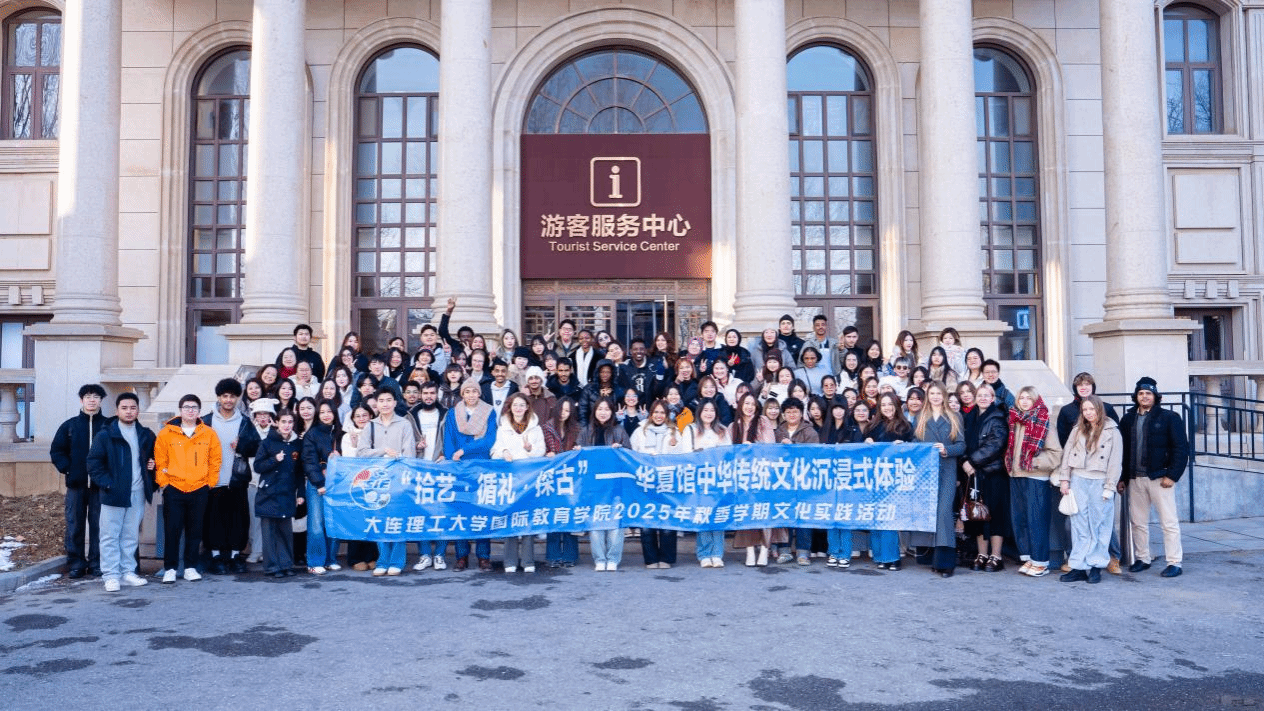
On the afternoon of December 14th, an immersive traditional Chinese culture experience activity themed "Exploring Arts, Observing Rituals, Delving into Antiquity" was successfully held at the Huaxia Qiyu Museum on Golden Pebble Beach. Over one hundred international students from the Chinese Language Training Center of Dalian University of Technology participated in this event.
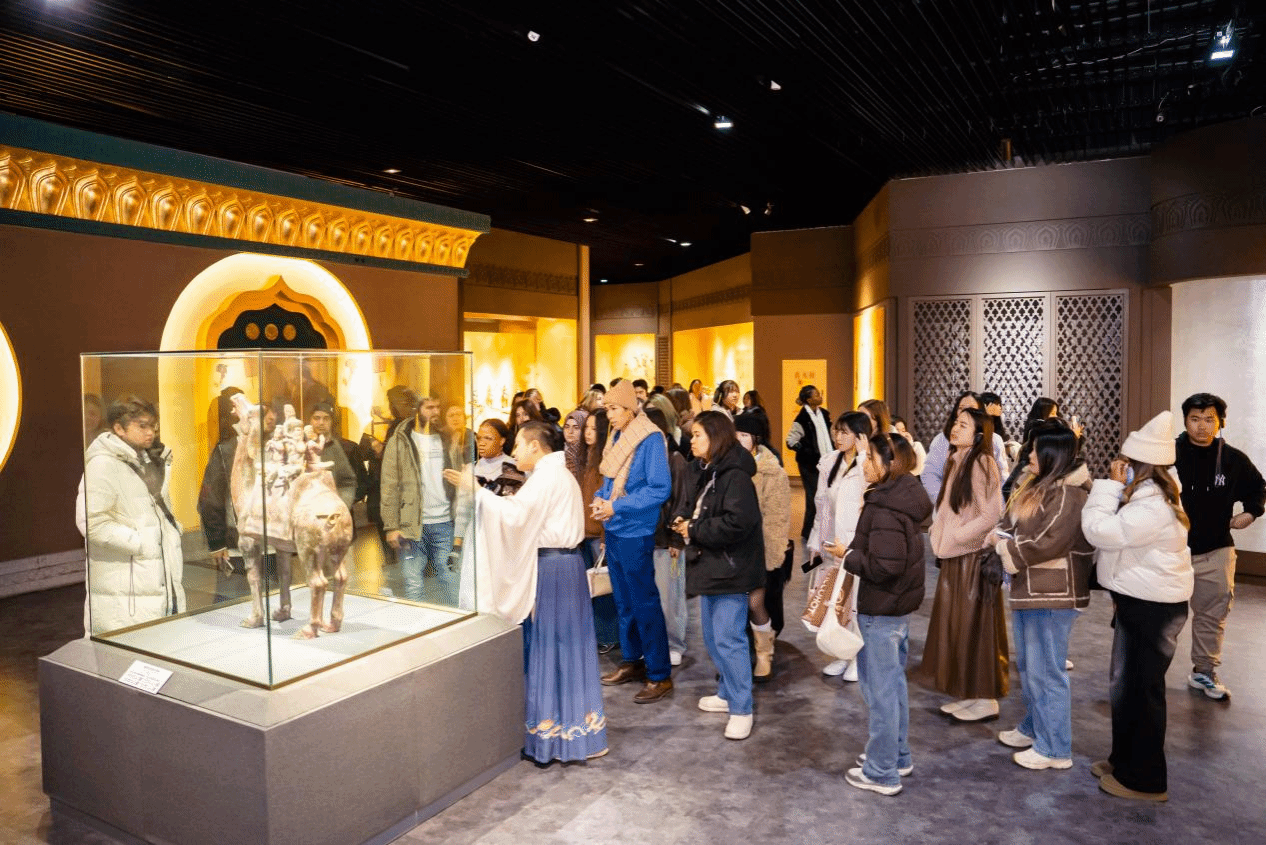
The event guided the international students to perceive Chinese civilization through hands-on experience and enhance their cross-cultural understanding via a series of activities including museum tours, interactive sessions on intangible cultural heritage skills, and lessons on traditional etiquette. During the "Delving into Antiquity" session, the students visited the museum's exhibition areas under the systematic guidance of professional docents. Through close observation of representative cultural relics such as bronze ware, jade artifacts, and ceramics, they constructed an initial holistic understanding of the characteristics and historical evolution of ancient Chinese craftsmanship. This also allowed for a deeper appreciation of the ritualistic ideologies and aesthetic concepts embodied within these artifacts. Particularly in the "Porcelain Voyages" exhibition hall, the narrative of ceramic development served as a compelling thread connecting the history of Sino-foreign exchanges. This presentation enabled the students to gain a more intuitive and tangible sense of the historical trajectory of Chinese civilization's engagement with the world.
The activity guided international students to perceive Chinese civilization through practical experience and enhanced their cross-cultural understanding via a series of sessions, including museum visits, intangible cultural heritage (ICH) skill workshops, and traditional etiquette lessons. During the "Delving into Antiquity" session, students toured the museum's exhibition areas under the systematic guidance of professional docents. By closely observing representative cultural relics such as bronze ware, jade artifacts, and ceramics, they established an initial holistic understanding of the characteristics and historical context of ancient Chinese craftsmanship, and gained in-depth insights into the ritual concepts and aesthetic values embodied in these relics. Particularly in the "Porcelain Voyages" exhibition hall, the development history of porcelain weaves together the narrative of Sino-foreign exchanges, allowing students to more intuitively perceive the historical trajectory of Chinese civilization spreading to the world.
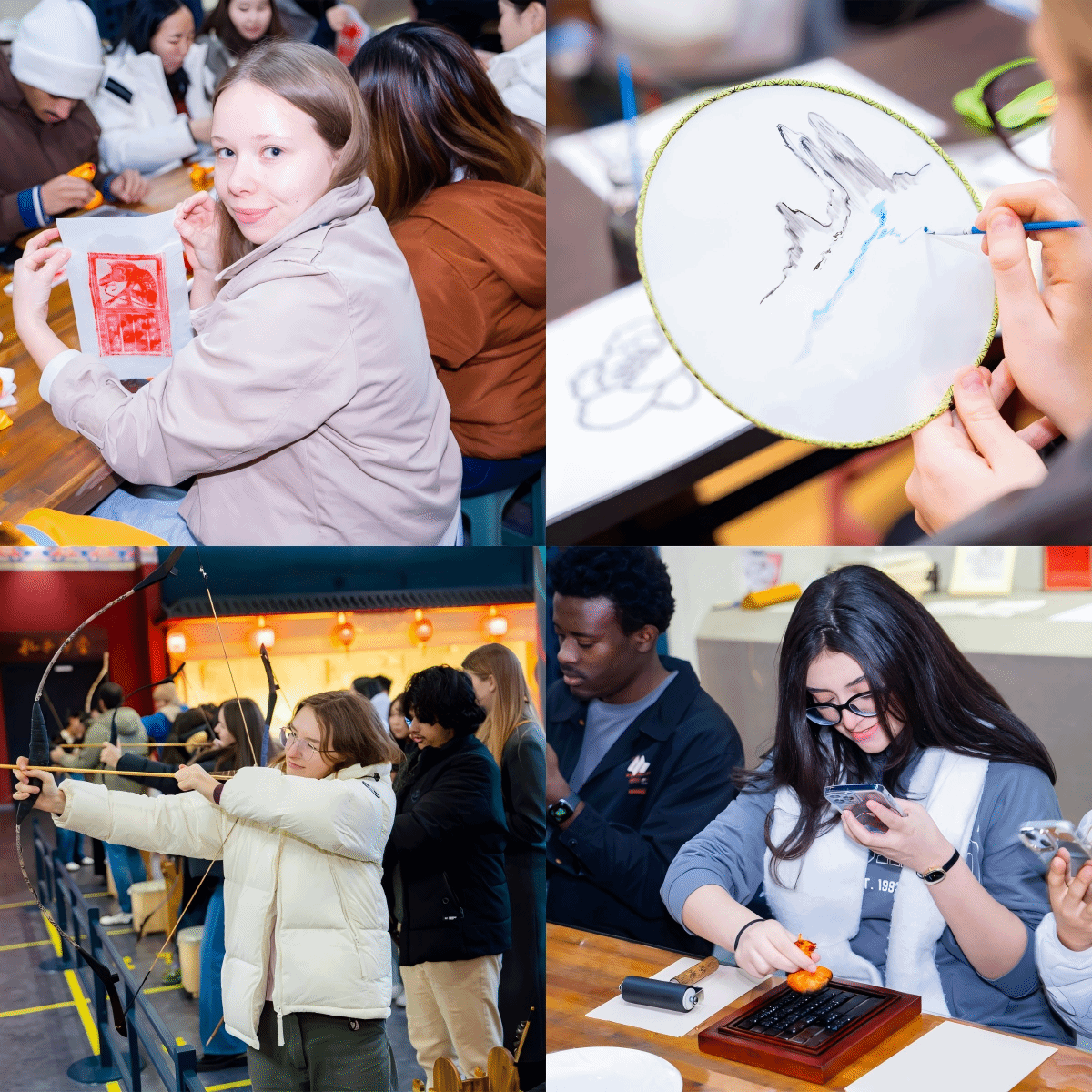
During the "Exploring Arts" session, international students stepped into a non-heritage workshop to experience three traditional handicrafts: movable type printing, ancient style rubbing, and painted round fans. In the movable type printing area, students applied ink and pressed paper to transfer classical Chinese poems onto Xuan paper, discovering the beauty of Chinese characters and poetry through hands on practice. In the rubbing section, they used stone carvings as the medium to feel the historical depth of traditional rubbing techniques. The painted round fan activity blended traditional craftsmanship with personal expression, allowing students to appreciate the contemporary value of intangible cultural heritage through creative work. Experiences in archery and Touhu (pitch pot) further helped students understand how ancient Chinese archery evolved from a ritual practice into an art form.
During the "Observing Rituals" session, international students entered a Confucian-style classroom dressed in traditional Hanfu. Under the guidance and demonstration of instructors, they learned traditional etiquette norms such as the fist-and-palm salute. Through simulated scenarios, they experienced the cultural spirit of respecting teachers, valuing moral principles, and treating others with courtesy embedded in Chinese traditional rituals. This immersive, scenario-based learning approach effectively deepened the students’ understanding and appreciation of Chinese ritual culture.
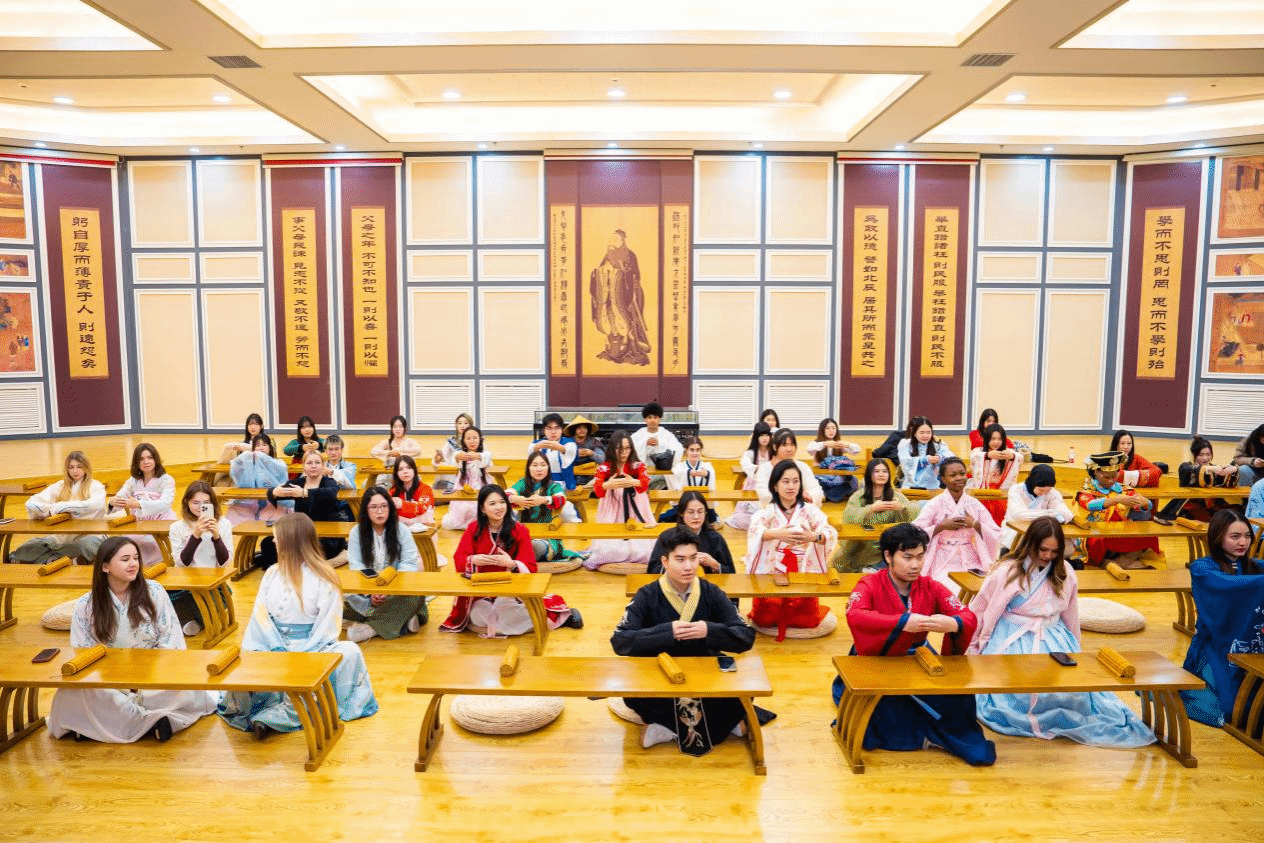
This cultural practice activity, themed "Exploring Arts, Observing Rituals, Delving into Antiquity," centered on traditional Chinese culture, and used "Delving into Antiquity" to scaffold the cognitive foundation, "Exploring Arts" to deepen hands-on experience, and "Observing Rituals" to guide reflection on cultural values, thereby fostering an organic integration of knowledge acquisition, practical engagement, and value-based understanding. The activity not only broadened the international students’ cultural horizons but also helped them comprehend Chinese modes of cultural expression in authentic contexts, further enhancing their cross-cultural communication and practical skills. Cultural practice activities serve as a key vehicle for the Chinese Language Training Center to advance the integration of "language teaching and cultural education." In the future, the Center will continue to focus on themes of outstanding traditional Chinese culture and contemporary China’s development, designing more substantial and immersive experiential courses. Through firsthand participation, students will be guided to read China, understand China, and tell China’s stories well, enabling them to better serve as bridges in the mutual exchange and appreciation between Chinese and other world civilizations.