


Congratulations on receiving your admission letter from a Chinese university! A brand-new chapter of your life is about to begin — new classes, new friends, new flavors, and countless opportunities to explore.
Before you zip up your suitcase and head to the airport, however, there are a few important things to prepare. From essential registration documents to everyday necessities, packing smart can make your arrival and first few weeks in China much easier. Not sure where to begin? Don’t worry! This pre-departure guide will walk you through the key preparations and help you start your study journey in China with confidence.

Before leaving home, check that you have prepared the following:
· A valid passport
· A valid X1 or X2 student visa
· Your Admission Notice
· The Confirmation Form for Study in China (JW201/JW202 Form) or Information Form for Short-term Study in China (DQ Form)
· The original copy of your highest diploma or degree certificate
· Recent passport-style ID photos
· Photocopies and digital backups of all important documents
Make several photocopies of your passport information page, visa page, Admission Notice, and other essential documents. It is also helpful to save digital copies on your phone, in your email, and in secure cloud storage.
Depending on your university, program, scholarship status, age, and length of study, you may also need to prepare:
· Foreigner Physical Examination Form and related medical test reports
· International student insurance certificate or proof of purchase
· Degree or diploma authentication report
· Scholarship or financial support documents
· Proof of payment for tuition, accommodation, or insurance
· Online pre-registration confirmation or registration QR code
· University accommodation reservation or off-campus housing information
· Notarized guardian documents for students under the age of 18
· Both your old and new passports if your passport was renewed after your application
· Other original application materials requested by your university or program
Important: Do not pack original documents in your checked luggage. Place them together in a waterproof folder and keep the folder with you throughout your journey.
Requirements may vary by university, program, and student category. Always follow the latest registration notice and emails issued by your university.
· Universal adapter: China uses 220V electricity at 50Hz, with two-flat-pin and three-pin sockets commonly used.
· Power bank: Do not bring one without a clear CCC (3C) mark. Power banks without a CCC mark, with an unclear mark, or from a recalled batch are prohibited on flights within China.
· Bank card: Bring an international card enabled for overseas use.
· RMB cash: Prepare a small amount for transport and immediate expenses. Cash of RMB 20,000 or more, or foreign currency exceeding USD 5,000, must be declared.
· Daily necessities: Pack enough toiletries, personal-care products, and medicine for your first few days.
· Prescription medicine:Keep it in its original packaging, bring a prescription or doctor’s letter if necessary, and make sure it complies with the latest China Customs regulations.
Most daily necessities, bedding, stationery, and seasonal clothing are easy to purchase after arrival, so there is no need to overpack.
· Complete the free online arrival card through the National Immigration Administration’s official platform.
· Download Alipay and WeChat, activate their payment functions, and try to link an eligible international bank card.
· Try to activate the metro and bus QR code for your destination city.
· Try using the ride-hailing services available within Alipay or WeChat.
· If travelling by high-speed rail, download Railway 12306, upload your passport information, and complete identity verification.
September weather varies greatly across China. Southern and eastern cities may still feel like summer, while northeastern and high-altitude areas can become noticeably cooler, especially in the morning and evening.
Use regional weather information as a general reference, and remember:
· Pack light, breathable clothes for warm and humid cities.
· Bring a sweater or light jacket for northern and northeastern China.
· Dress in layers in northwestern and high-altitude areas, where temperatures can change sharply between day and night.
· Carry a compact umbrella or light rain jacket in eastern, central, and southern regions.
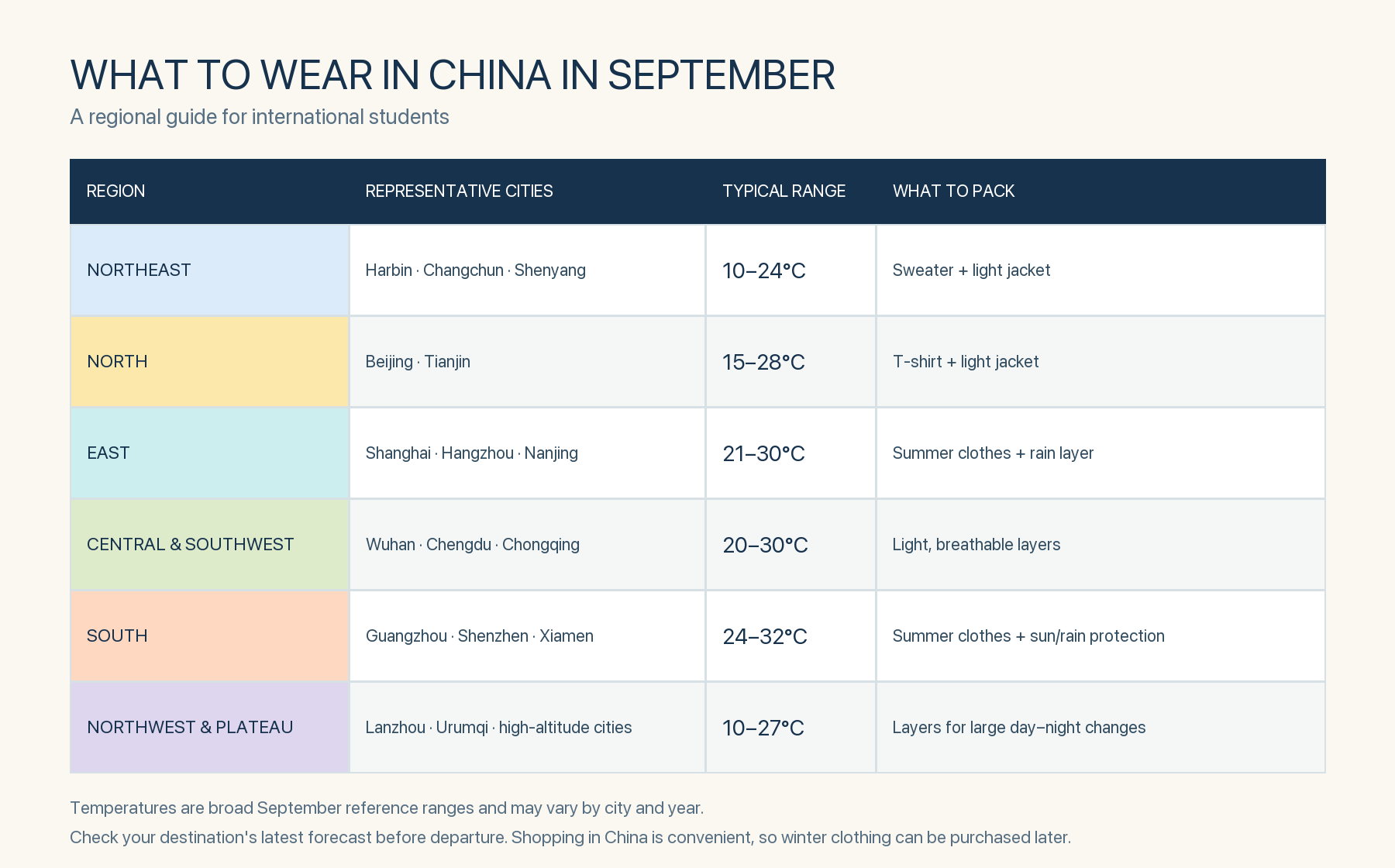
There is no need to pack clothing for the entire academic year. Online shopping, malls, and clothing stores are widely available in China, so winter coats and other seasonal items can be purchased after arrival.
Chinese food is incredibly diverse. Flavors can vary greatly between regions—and even between restaurants in the same city. Use regional food traditions as a starting point for your culinary adventure!
· If you prefer less spice, ask for “bú là” (not spicy) or “wēi là” (mildly spicy).
· University canteens and major cities usually offer a wide range of regional and international food.
Check whether your university provides halal, vegetarian, or other special dietary options if needed.
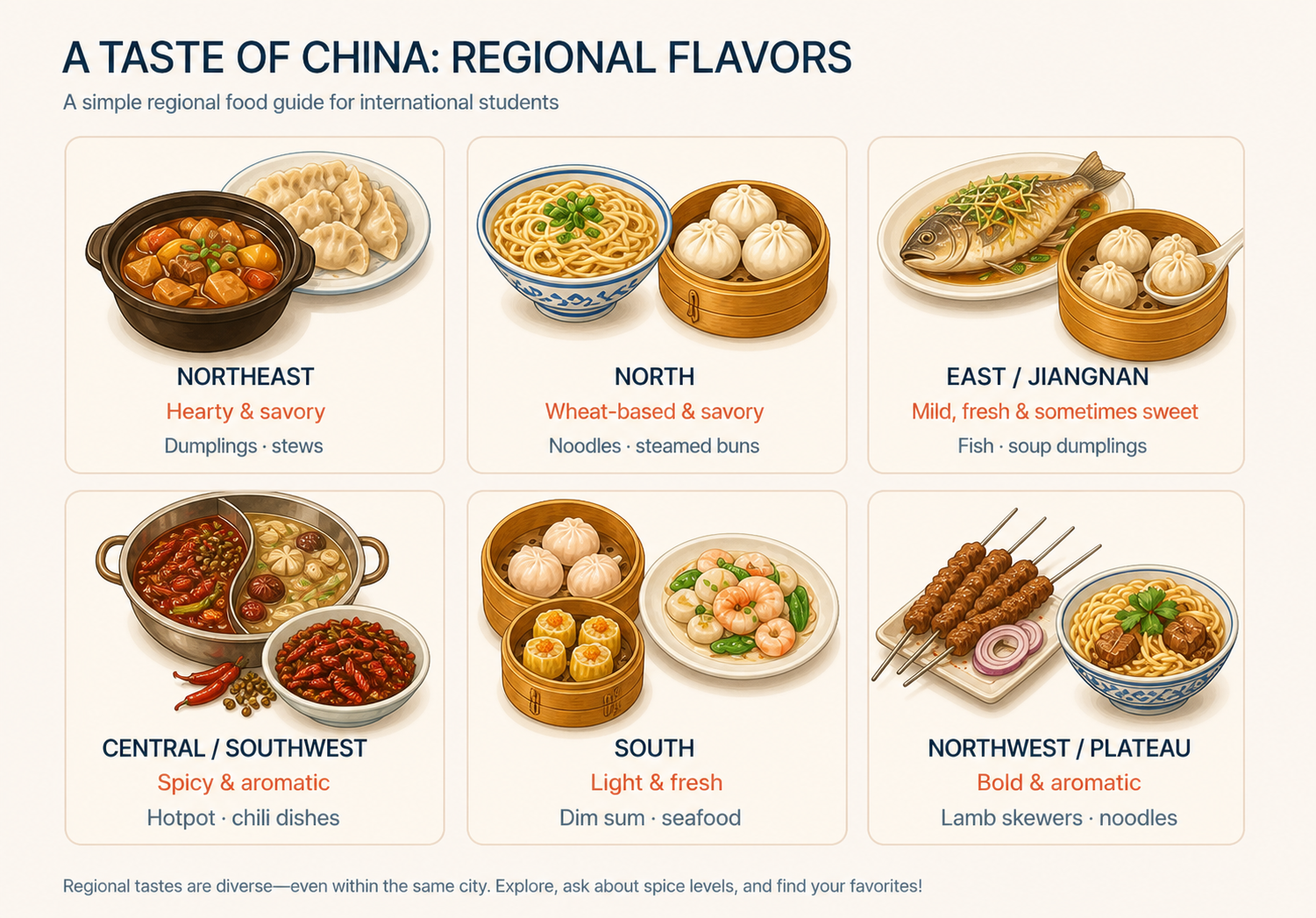
You may bring a small amount of familiar food from home to help during your first few days. Choose sealed, commercially packaged products and check China Customs rules before packing.
Important: Do not bring fresh fruit or vegetables, meat or meat products, and other prohibited animal or plant products. Certain dairy products and homemade food may also be restricted. If you are unsure, check the official China Customs passenger guide before departure and declare restricted items upon entry.
With your documents organized, essentials packed, digital tools ready, and a better understanding of China’s weather and food, you’re all set for your new journey!
Remember to check the latest information from your university, airline, and official Chinese authorities before departure. A little preparation will make your arrival much smoother and give you more time to enjoy campus life, meet new friends, and explore everything China has to offer.
Safe travels, and welcome to China!